Sewer Camera Inspection in Carrollton, TX
Sewer camera inspection in Carrollton, TX lets a technician see inside your main sewer line before any digging or repair begins. A small waterproof camera on a flexible cable records cracks, root intrusion, bellies, and buildup, so you know exactly what is wrong. We connect Carrollton households with the providers we connect you with for camera work.
What Sewer Camera Inspection in Carrollton, TX Covers
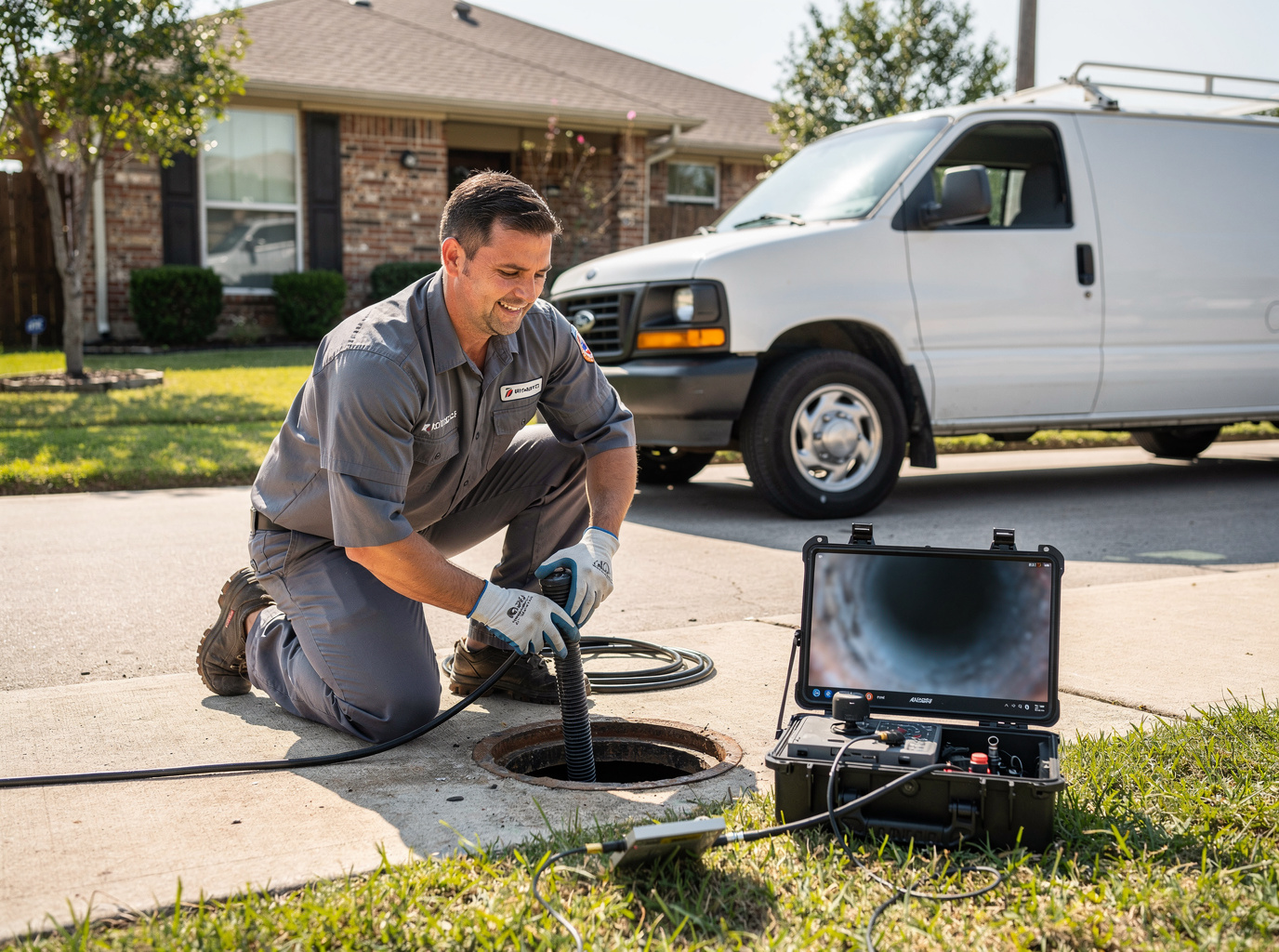
Sewer camera inspection in Carrollton, TX covers the main drain that carries wastewater from your home's plumbing to the city connection or septic system. The technician feeds a flexible rod fitted with a high-resolution camera through a cleanout or a fixture drain, then walks it down the line while watching a monitor. The footage shows the pipe's condition from the inside, including its material, diameter, slope, joints, and any obstructions along the route. Most visits are about seeing rather than fixing, so the result is a clear picture of what the pipe actually looks like.
The inspection also records the approximate distance from the access point to each problem, which matters when a repair technician needs to dig in one spot instead of opening the yard in several places. Many providers record the session and share the video, so you can see the same pictures the technician saw. Inspections are commonly requested before a property purchase, after a backup, when a remodel changes the plumbing, or when a plumber suspects a line problem but cannot confirm it without looking inside. Within the providers we connect you with, the scope of the camera work is explained before anything starts.
Signs Sewer Camera Inspection in Carrollton, TX Is Needed
Several everyday symptoms point toward a sewer camera inspection rather than a quick drain cleaning. Slow drains that stay slow after a plunger or drain snake, gurgling sounds from toilets or tubs when other fixtures run, and sewage odors near floor drains are common early signs. Water backing up in the lowest fixture, such as a basement shower or a first-floor tub, can suggest a blockage downstream of the main line. Repeated clogs in the same spot, even after cleaning, usually mean something structural or buildup-related is still present.
Changes in the yard can be just as telling. Soft spots, sunken patches, or unusually green strips running in a line across the lawn may signal a leaking pipe. Foundation movement, cracks in interior slabs near the drain path, or a water bill that rises without a clear cause are also reasons to look inside the line. Inspection is especially useful before any excavation, because it confirms whether the problem is in the line at all and where it begins. If you notice several of these signs together, the providers we connect you with can schedule a camera visit to check the whole run.
Sub-services Within Sewer Camera Inspection in Carrollton, TX
Sewer camera inspection is often bundled with related sub-services, and knowing the difference helps you ask the right questions. Basic camera inspection records the line and notes its condition. Locating uses an electronic transmitter to pinpoint the depth and position of the pipe from above ground, which is valuable when a line runs under a driveway or patio. Hydro jetting may be recommended after the camera shows grease or scale buildup, because high-pressure water clears the pipe walls so the footage is clearer and the flow improves.
Other sub-services connect directly to what the camera finds. Root cutting addresses roots that have entered a joint, and it is usually followed by a repeat inspection to confirm the opening is clear. Drain cleaning with a snake handles a single blockage but does not reveal defects, so a camera check is often done before and after. Video documentation for a property sale or an insurance file is another sub-service some clients request, and the providers we connect you with can confirm whether they supply written reports. Ask each provider exactly which of these steps are included in the visit you are booking.
How Sewer Camera Inspection in Carrollton, TX Is Carried Out Step by Step
The process starts with a short conversation about the symptoms and the location of the main cleanout, which is often near the foundation, along an exterior wall, or in a utility area. First, the technician checks the access point and confirms the property's plumbing layout, including whether any fixtures have been added or changed over time. Next, the camera head is inserted, and the line is cleared enough to pass, a step that may involve a quick flush if debris is present. The camera then travels slowly through the pipe while the technician watches the monitor and records the run.
As the camera moves, the technician notes the pipe material and joint condition, pausing where something looks unusual, such as cracks, offset joints, roots, low spots, or buildup. Cable markings help locate each finding along the run. Once the inspection is complete, the camera is withdrawn and the cleanout is closed. The technician then explains what was seen, usually while showing short clips or still images. Finally, you receive a summary of findings and a list of recommended next steps, which may include cleaning, a targeted repair, or further testing. You are not obligated to act on any recommendation on the day of the visit.
What's included in Sewer Camera Inspection in Carrollton, TX
What's included depends on the provider and the visit you book, so confirm the details before scheduling. In most cases, the visit includes the camera trip through the main sewer line from the cleanout to the point where it connects to the municipal main or septic tank, along with the technician's verbal explanation of the findings. Many visits also include recording the footage, noting the approximate distance to each defect, and providing a written or digital summary. Some providers include a basic check of accessible branch lines near the home.
Items that are often separate include excavation, pipe repair, pipe replacement, root removal beyond what the visit requires, and hydro jetting. Trenchless options or lining work are usually scoped only after the inspection has been completed. Permit questions for work in the public right of way are also separate from the inspection itself. Because the providers we connect you with set their own scope, ask whether the footage will be shared with you as a file, whether a written report is provided, and whether the findings can be sent to another contractor if you want a second opinion.
Carrollton Homes and Next Steps After Sewer Camera Inspection in Carrollton, TX
Carrollton homes range from older neighborhoods to newer subdivisions, and the sewer line in each can be quite different. Older homes may still have clay, cast iron, or early plastic lines that have aged, while newer construction typically uses modern PVC. North Texas soils include clay that swells in wet periods and shrinks in dry spells, which can shift joints over time. Large mature trees common in many Carrollton yards may send roots toward the line, especially where older joints have opened. A camera visit gives a direct look at these conditions rather than guesses based only on the age of the house.
Prevention helps keep the line in good shape between inspections. Avoid flushing wipes, paper towels, grease, coffee grounds, or feminine products, and run plenty of water after using a garbage disposal. Plant large trees away from the sewer path where possible, and watch the yard for early signs of trouble. If you are preparing a home sale, scheduling an inspection before listing can help you understand the line's condition before buyers ask. Next steps usually begin with a request to the providers we connect you with, a clear description of your symptoms, and the location of your cleanout if you know it.
What the Camera Shows Inside Your Sewer Line
A sewer camera inspection uses a small waterproof camera on a flexible cable, fed into the drain line through a cleanout or a fixture opening. As the camera moves, it sends a live picture to a monitor so the technician can see the inside of the pipe. Many homeowners in Carrollton have never seen their own sewer line, so the first look can be surprising. The footage often reveals problems that cannot be seen from the surface, such as cracks, offset joints, or areas where soil has shifted around the pipe.
Common findings include roots growing through joints, grease or debris narrowing the pathway, sagging sections that hold water, and older materials that have worn thin. Some camera runs also show where a side branch connects to the main line. The providers we connect you with typically record the footage so you can feedback it at your own pace, and they can note where problem areas sit relative to the cleanout. Every line is different, so the footage from your own property is the most reliable guide to its condition.
Questions to Ask Before a Sewer Camera Visit
Before booking a visit, it helps to know what you want the inspection to answer. If you are buying or selling a home, you may need a written record of the line's condition. If you have recurring backups, you may want to know whether roots, a break, or a low spot is behind them. Write down the symptoms you have noticed, such as gurgling drains, slow water in several fixtures, or wet patches in the yard, so the provider can focus the camera run on the right area.
When the providers we connect you with arrive, ask them to show you the footage on the monitor and explain each finding in plain terms. Ask whether the recording will be saved and given to you in a format you can keep. Ask which parts of the line were reached and which were not, since a blocked or collapsed section can stop the camera before it reaches the street connection. A clear answer to these questions tells you how complete the inspection was.
Reading the Footage and Planning Next Steps
A camera visit is information, not a repair by itself. Once the footage is reviewed, the next step is deciding whether the problems you saw need action now, can be monitored, or are cosmetic. A cracked joint that is dry and stable is different from one that is letting soil into the pipe. Take time with the report and compare it against your symptoms before agreeing to any work. A camera also cannot see the outside of the pipe or the soil around it, so the footage describes only what is inside.
If the providers recommend further work, ask them to describe the options in writing, including what each option addresses and what it leaves untouched. Keep the recording with your home papers so future buyers, insurers, or plumbers can compare the line over time. The camera view is a snapshot, so a second inspection after heavy rain or a period of root growth can show whether conditions have changed. Use the findings to plan, not to panic.
Questions about Sewer Camera Inspection in Carrollton, TX
How long does a sewer camera inspection in Carrollton, TX usually take?
Visit length depends on how long the main line is and what the technician finds along the way. Simple runs are often completed in a single visit, while longer lines or added locating work can take more time. Ask the providers we connect you with for an expected timeframe when you book.
Can a camera inspection explain a slow drain in only one bathroom?
It can, although a single slow fixture often points to a problem in a branch line rather than the main. The camera can travel into branch lines that have accessible cleanouts, and the technician can note whether the blockage is local or deeper in the system. If the main line looks clear, the issue is often limited to that fixture.
Do I need to be home during a sewer camera inspection?
Most providers prefer that someone be present to answer questions, confirm the access point, and point out which fixtures are used in the home. You may also be asked to avoid running water during the visit. Ask the providers we connect you with whether they need access to a specific area of the property.
Will the camera show whether tree roots are in my sewer line?
Often yes, when roots have entered a joint or grown into the pipe. The footage shows where root intrusion starts and how large the mass appears. The camera cannot always show roots outside the pipe that have not yet entered, so the findings describe current conditions rather than predicting future growth.
What should I do with the footage after a Carrollton sewer camera inspection?
Keep the video or photos with your home records, and share them with any contractor you consider for repairs so they can plan the work from the same information. If you are selling the property or filing an insurance claim, the footage can support those discussions. Ask the providers we connect you with whether the recording is provided as a file.
This Sewer Camera Inspection page covers the neighborhoods listed in the areas section of this site.